


I Took the World's Strongest Antioxidant for My Screen-Tired Eyes for 30 Days. Here Are 6 Things Nobody Tells You First

Results may vary from person to person
"Why do you keep rubbing your eyes like that?"
A coworker asked me that on a video call, not unkindly, just curious. I'd slept a full eight hours. My eyes clearly hadn't gotten the message.
That evening I shut my laptop and just sat there for a second. My eyes were burning the way they do after ten straight hours of screens, not painful exactly, just worn out, like they'd been squinting all day without asking my permission first.
And it wasn't for lack of trying. I had blue-light glasses sitting in a drawer more than on my face, a bottle of eye drops I used like mouthwash, and a phone reminder for the 20-20-20 rule that I ignored within a day of setting it.
And nothing changed.
My eyes still felt gritty by early afternoon. Still stinging after back-to-back video calls. Still tired by 3pm no matter how many breaks I forced myself to take. Everything else about me felt fine except whatever was going on behind my own eyes.
Then a friend, not an eye doctor, not some wellness influencer, just a woman about my age who spends as much time on screens as I do and somehow doesn't seem as wrecked by it, told me something that changed how I thought about the whole problem:
"It's not about what you do to your eyes. It's what's happening in your cells that nobody talks about."
She explained that eye drops and blue-light filters only deal with the surface. The strain I kept feeling starts deeper, at the cellular level, where free radicals from screen time, stress, and poor sleep wear things down from the inside. None of the stuff on my desk was ever going to touch that.
"You've been treating the surface," she said, "not what's actually running low underneath it."
Then she reached into her bag and pulled out a white and burgundy pouch of softgels. Astaxanthin, she called it. One of the strongest natural antioxidants there is.
"This is what I take for my eyes now. It works from the inside, where the strain actually starts."
1. The pigment algae make to survive the sun, and why it's 6,000 times stronger than vitamin C

The pouch was Rovina Astaxanthin 12mg Softgels. Astaxanthin is the deep red pigment that Haematococcus pluvialis microalgae make to survive intense UV and drought stress. When their pond dries up and the sun turns brutal, the algae flood themselves with this pigment and just wait it out. It's the same pigment behind the pink in salmon and flamingos, passed up the food chain from whatever they eat.
Each daily dose is Astaxanthin 12mg from Haematococcus pluvialis microalgae, carried in organic coconut oil for absorption. It's non-GMO, gluten-free, soy-free, and third-party tested every batch.
The numbers are what stopped me. At neutralizing free radicals, astaxanthin measures roughly 6,000x stronger than Vitamin C, 800x stronger than CoQ10, and 550x stronger than Vitamin E. I read that sentence three times. Every antioxidant supplement I'd ever bought was built around vitamin C, and here was a molecule thousands of times stronger at the exact job I thought those were doing.
Rovina appealed to me because it wasn't another gadget or drop aimed at one spot. Astaxanthin is both water and fat soluble, so it can anchor across the entire cell membrane and support cells from the inside, all over the body. Eye antioxidant support is part of that whole-body picture, not some separate claim bolted on.*
The simplicity helped too. No routine to build, no timers, no product order to remember. Softgels with meals, and I was done for the day.
2. Week one: nothing. And nobody tells you that part

Results may vary from person to person
Here's the part every rave review conveniently skips: for the first week, nothing happens. I ordered a pouch, took my softgels every day, and waited.
Day one felt like taking any other supplement. Day four, the same.
By day seven my eyes were just as tired by the afternoon as they'd always been, no different from before I started. I texted my friend a draft complaint: "I don't think this one is doing anything for me."
I never sent it. Instead, I went back to the research that had convinced me to try it in the first place.
"It sounds silly when I say it now," I admitted to my friend weeks later, "but that night decided the whole thing."
What I found is that the quiet first stretch is completely normal. Astaxanthin has over 70 peer-reviewed human clinical studies behind it, and they point to the same pattern: the antioxidant activity starts at the cellular level long before you'd notice anything by the time you close your laptop.*
Most people notice their first changes at the 3 to 4 week mark, not the first week. The studies describe weeks one and two as a foundation phase: the molecule is working, and most people feel no dramatic change yet.*
*Individual results vary.
Nobody puts that on the label. If they did, I think fewer people would quit at day ten the way I almost did.
So I kept going. Two softgels in the morning, two in the evening, every day, and I stopped checking how my eyes felt every hour like it was going to change on command. I marked day 21 on my calendar and told myself I'd judge it then.
Turns out I didn't have to wait quite that long.
Somewhere around the end of week two, something small shifted, and it caught me completely off guard.
3. Four softgels, two meals, and the first flicker of change

Before I get to what actually changed, the routine itself, because I had questions about the dose going in. Rovina's protocol is 4 softgels daily: 2 in the morning and 2 in the evening, each with a meal that contains some healthy fat.
The split matters, according to Rovina.
Astaxanthin is fat soluble, and your body can only absorb so much of it at once. Rovina compares it to watering a plant: dump the whole can on at once and most of it just runs off the soil. Split it across two waterings and more of it actually soaks in.
It's also why the softgels use organic coconut oil instead of a dry powder capsule. Fat-soluble molecule, oil-based carrier, that pairing just makes sense. Most brands stop at 4 to 6mg in a dry-powder capsule, which answered my biggest supplement gripe before I could even raise it: whether any of it actually gets absorbed.
In practice the routine took no thought at all. Two with breakfast, two with dinner. And then, near the end of week two, I caught the first real sign that something was happening.
It was a Thursday, after one of those long screen-heavy workdays that usually leaves my eyes feeling raw by 6pm. I closed my laptop expecting the usual burn. My eyes felt a little less strained than they should have.*
I want to be careful here, because I'd been burned by enough products to distrust my own hope. Maybe it was the light. Maybe I'd slept better than I thought.
But it kept happening. The next few evenings my eyes felt less strained than they had any right to after the day I'd had, and the heaviness that usually settled in by dinner seemed to show up a little later each time.*
Nothing dramatic. Nothing I could have explained to anyone else. But enough to make me pause.
This lines up with the research timeline, which puts the first subtle changes at weeks 3 to 4. I was seeing the very front edge of it.*
It was the first evening in a long time I felt hopeful about my eyes instead of just resigned to how they'd feel by dinner.
4. The morning my eyes actually felt different
Results may vary from person to person
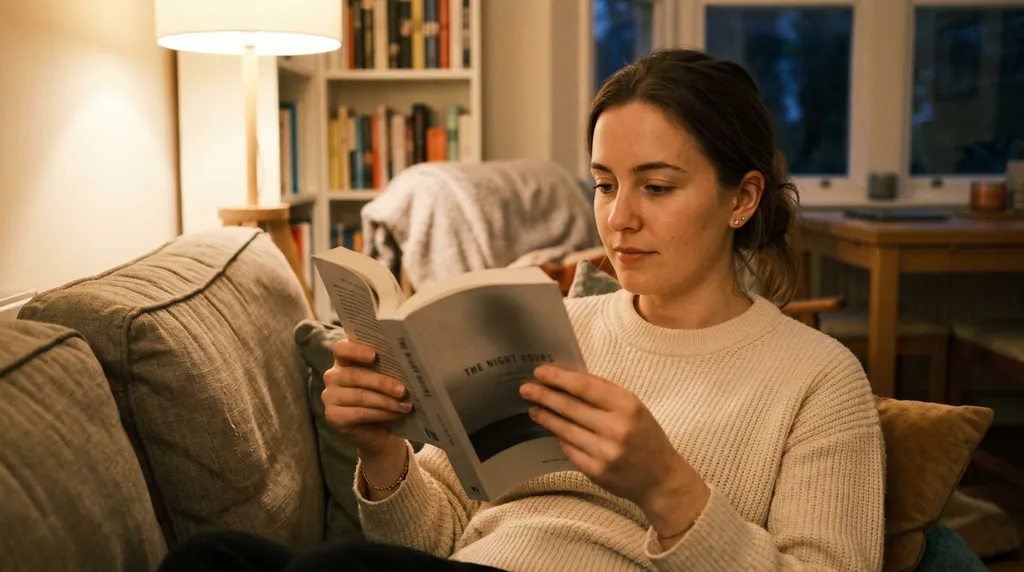
It didn't really announce itself. Somewhere around day 18, I got through a long stretch of video calls and realized, around 6pm, that my eyes weren't burning yet. I figured it was a fluke: maybe I'd slept better than usual, maybe the office lighting was just easier that week.
Then it kept happening. A few days in a row where I made it through back to back screen time without reaching for eye drops once. Evenings where I could read for a while before bed instead of giving up because the words started swimming.* I couldn't point to the moment it changed. I just noticed I'd stopped doing that thing where you press your palms into your eyes at the end of the day.
"Are my eyes okay right now?" I said it out loud, sitting at my desk well past when they'd normally start aching. "No drops. No break. Nothing."
My husband noticed too, in his own oblivious way. He asked why I'd stopped complaining about my eyes every night after work, which made me laugh, because he had no idea I'd started taking anything at all.
Then came the moment that surprised me. Day 21, a weeknight. I used to give up on reading in bed after ten minutes because my eyes would start burning, so I'd end up scrolling my phone instead, which somehow never bothered them the same way. That night I got through almost a full chapter and only stopped because I was tired, not because my eyes gave out first.
I read for forty five minutes straight and never once had to close my eyes and press on them.
"It's just reading before bed," I know. "But I hadn't finished a chapter in years without my eyes forcing me to stop. That night I just forgot they used to."
That same week, two different people asked why I seemed less worn out by the end of the day. I stopped reaching for eye drops most afternoons. That alone felt like a real shift.
Because that's the real reason people my age end up trying every gimmick for screen fatigue, from blue light glasses to whatever gadget is trending that month. Not because we enjoy owning more stuff. It's for relief from that quiet dread of another day ending with your eyes feeling wrecked before the rest of you does.
That was the first thing Rovina gave back to me: the sense that my eyes could keep up with a full day instead of tapping out by mid afternoon.
5. The Moment Others Started Noticing...

By week four, it wasn't just me noticing anymore. I looked less wiped out by the end of the day, and people picked up on it, even over video calls, which says something.
Around day 24, I had dinner at my sister's place. She sees me all the time, so she is the last person on earth to hand out compliments.
"You look so much less tired than usual. What's different?" she asked, studying me across the table. Nobody had said anything like that to me in longer than I can remember.
And I hadn't slept any better that week. I just wasn't squinting at my phone, wasn't blinking hard trying to reset my eyes every hour, the stuff I'd stopped even noticing I did.*
"That was when it stopped feeling like wishful thinking," is the honest way to put it. "It wasn't just me noticing in my own mirror anymore. Other people could see it."
The comments kept coming. A coworker asked why I didn't look as fried after our afternoon call block, and I didn't have a real answer for her. Here's the part that got my attention: by the end of week four, my eyes felt less wrecked after a full day on screens. I'd close my laptop at six without that dry, strained heaviness I had assumed was just part of working a screen job now.*
Those comments mattered because nobody guessed I was taking anything. They just said I looked less tired, more like myself.
Which was exactly what I wanted.
That dinner is when I decided to write this piece. Nobody asked me to. I've spent years trying every fix for screen tired eyes, drops and blue light glasses mostly, and none of it stuck the way this has. If four softgels a day beat an entire drawer of eye drops and gadgets, other people dealing with the same thing deserve to hear about it.*
"Looking less exhausted wasn't even the whole point," if I'm honest. "Feeling like my eyes could keep up with the rest of my day was."
So if you're wondering why a stranger is telling you about her supplement routine, it's simple. My eyes are the reason I wrote this.
6. Why This Beat Every Trick I'd Tried for Tired Eyes
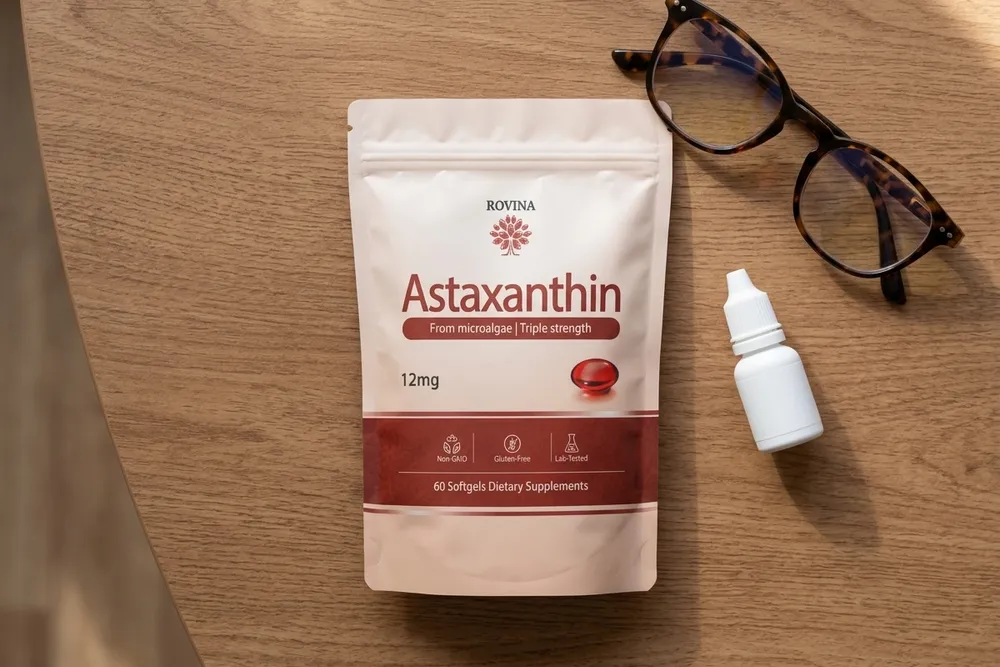
Here's what I found once I looked into the research. Eye drops and blue light glasses only deal with symptoms on the surface, and only for as long as you keep using them. None of it works at the cellular level, which is apparently where the real oxidative stress from staring at screens all day happens. I'd spent years treating the surface while the real wear and tear kept happening underneath it.
Astaxanthin works from the opposite direction: within.
Each Rovina softgel delivers the full 12mg clinical dose of astaxanthin from Haematococcus pluvialis microalgae, the pigment these algae produce to survive intense sun exposure and stress. Here's what convinced me, in plain terms.
Cellular Defense*: Free radicals from screens, sun exposure, stress, and normal aging wear your cells down from the inside, and for me that showed up as eyes that felt fried by dinnertime most days. Astaxanthin neutralizes those free radicals, and it's been measured at 6,000x stronger than Vitamin C, 800x stronger than CoQ10, 550x stronger than Vitamin E, and 75x stronger than Alpha Lipoic Acid at doing exactly that.
Whole-Cell Coverage*: Most antioxidants are only water soluble, so they can only protect one side of your cell membrane. Astaxanthin is both water and fat soluble, which lets it anchor across the entire membrane and cover both sides at once.
Real Absorption: This was my big hangup going in, because I've been burned by supplements that just pass straight through you. Astaxanthin is fat soluble, so it needs an oil based carrier to absorb properly. Rovina delivers the full 12mg dose in organic coconut oil inside each softgel, so it reaches your cells instead of going to waste.
Compounding Benefits*: Most people notice the first changes around weeks 3 to 4, with things tending to peak somewhere around weeks 6 to 8. And unlike eye drops, which stop doing anything the moment you stop using them, this kind of cellular support seems to build the longer you stay consistent, instead of fading.
Instead of reaching for drops every few hours and hoping, you take your softgels with meals and let the antioxidant support work at the cellular level while you get on with your day.* Two in the morning, two at night, both with something that has a little fat in it. That's the whole routine.
Real Customers, Real Results.
Since I first posted about my 30 days with Rovina Astaxanthin, other people have messaged me with stories that sound a lot like mine.* Getting through a full day of screens without wanting to lie down in a dark room by 6pm.* Most of them said some version of "I figured it was hype and now I'm annoyed it wasn't."
That's the kind of result I trust. Not a staged before-and-after photo. Just the small, ordinary moments when you stop feeling wrecked by the end of the day.

Results may vary from person to person
"Only a few weeks into this and honestly a little surprised at how much better I'm doing already.*"
Mikie

Results may vary from person to person
"Does exactly what it's supposed to, and you're not left feeling shorted on quantity either.*"
Reuben M.

Results may vary from person to person
"Package showed up today and I'm already taking my first dose. Whoever runs their support line deserves a shoutout, they made the whole process painless.*"
Charity
*Results may vary.
Where to get the real 12mg dose (and what the current offer includes)

Results may vary from person to person
Here's the catch I promised. Astaxanthin got popular enough that the knockoffs showed up right behind it. A lot of what gets sold under that name these days is synthetic, made from petroleum instead of algae, or underdosed at 4mg, a third of what the clinical research used. If you've tried one of those and felt nothing after a month, that's not astaxanthin letting you down. That's just the wrong product.
Everything I've described in this piece traces back to studies using 12mg of natural astaxanthin from Haematococcus pluvialis microalgae, which is exactly the dose Rovina Astaxanthin puts into every daily serving, sourced from the actual microalgae instead of synthesized in a lab. It's the amount your cells need to notice a difference, whatever your day looks like on a screen. Rovina sells exclusively through its official website, which is how they control quality on every batch and back each order with a 90-day guarantee.
At the time of writing, first-time customers can claim:
- ✅ Up to 67% off Rovina Astaxanthin introductory pricing (not available in retail)
- ✅ Buy 1 Get 1 FREE, Buy 2 Get 2 FREE, and Buy 3 Get 3 FREE bundle deals (Buy 3 Get 3 includes free shipping)
- ✅ 90-Day Money-Back Guarantee: if it doesn't work out the way it did for me, you get every cent back within 90 days, plain and simple.
Most people notice the first changes around weeks 3 to 4, and things tend to peak somewhere around weeks 6 to 8, comfortably inside that 90-day window.* That's the real point of the guarantee: you get a full two months to decide whether it's working before the refund clock is anywhere near running out.
👉 CHECK AVAILABILITY »Why Rovina keeps selling out

Since word got around, Rovina has been picking up a lot of attention from people who are done with the underdosed stuff on store shelves and just want the real 12mg clinical dose, especially anyone whose eyes are wrecked by a full day of screens the way mine were. There's also a real bottleneck behind the scenes: every batch gets tested by an independent lab for purity and heavy metals before it ships, and that testing is what actually slows down how fast they can restock.
If the promotion's still running by the time you click through, you can still lock in the bundle pricing on Rovina Astaxanthin before this batch sells out.
I don't usually end things like this. But thirty days in, I'm not going back to how my eyes used to feel, and it would feel dishonest not to mention that this pricing isn't going to stick around.
Click the button below to check availability and grab your discount on Rovina Astaxanthin while the current promotion is still live.
Update: As of when this was written, the Rovina product page still had the promotional pricing, low-stock notice, and the 90-day money-back guarantee live. None of that is guaranteed to still be there tomorrow, not the discount, not the bundle options, not the shipping offer. If you've been on the fence about trying Rovina, it's worth checking availability now instead of waiting and missing this round of pricing.